Planning guide
A 2-Day Self-Guided Driving Route of the D-Day Beaches
Quick answer
Base yourself in Bayeux and split the coast in two. Day one covers the American sector: Sainte-Mère-Église, Utah Beach, La Cambe, Pointe du Hoc, the American Cemetery and Omaha, about 155 km. Day two covers Gold, Juno and Sword, about 100 km. Plan each day around the cemetery's 4:30 p.m. last admission and the 2026-27 closures.
| Fact | Detail |
|---|---|
| Day 1, American sector | 155 km (96 miles) from Bayeux and back, about 2 h 40 of driving |
| Day 2, British and Canadian sectors | 102 km (63 miles) from Bayeux and back, about 2 h of driving |
| Fixed point of day 1 | Normandy American Cemetery, 9 a.m. to 5 p.m., last admission 4:30 p.m. |
| Pointe du Hoc | Restoration until mid-2027: west path only, main parking lot (P1) closed until early 2027 |
| Mémorial Pegasus | Museum closed for works until spring 2027; the bridge and canal bank stay open |
| Entry fees | Beaches, cemeteries and memorials free; museums from $10 / €9 |
This is the two-day version of the D-Day beaches by car: the American sector on the first day, the British and Canadian sectors on the second, with Bayeux as the base both nights. It's built stop by stop, with an arrival time, how long to stay and what each site's opening hours are, so you can see where the day is tight and where it isn't.
Two things to know before you trust any clock on this page. The driving times come from OpenStreetMap routing with no traffic, and the time at each stop is my suggestion, not an official figure. The opening hours are the summer ones, checked on each site's official page in November 2026; the winter changes are listed further down.
If you only have one day, my D-Day beaches guide has a one-day loop of the American sector, with its own map and leg-by-leg table. This page doesn't repeat it.
Before you start
Sleep in Bayeux. Both days start and finish there. It's about 24 km (15 miles) from the American Cemetery and 9 km from Longues-sur-Mer, so neither day opens or closes with a long drive. My where to stay in Normandy guide compares Bayeux with Caen and Arromanches.
See hotels in Bayeux on Booking.comvia Booking.com
Pick up the car the day before. Bayeux has very few rental cars; Caen station has many more, about 30 minutes away by road. My car rental guide for Bayeux and Caen explains where to pick up, why you should book an automatic early, what US drivers need (an International Driving Permit) and, in its parking table, what each site's official page says about parking. I don't repeat that table here.
Compare rental cars in Bayeux and Caen on Discover Carsvia Discover Cars
If you drive from Paris, remember that the A13 Saint-Cloud tunnel is closed in the Paris-to-Normandy direction from November 16, 2026 to August 31, 2027, according to the Préfecture d'Île-de-France. Bayeux is about 263 km (163 miles) from Paris.
Pack for the day. Water, a picnic or a plan for lunch, and walking shoes: Pointe du Hoc is cratered ground, and you'll walk on sand and gravel at most stops.
Since July 26, 2026, Utah, Omaha, Gold, Juno and Sword beaches and Pointe du Hoc are a UNESCO World Heritage Site, listed as "The D-Day Landing Beaches, Normandy, 1944".
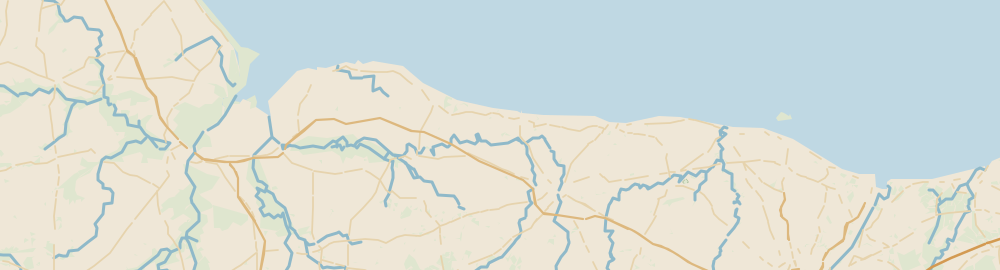
- 1Bayeux · Base for both days
- 2Sainte-Mère-Église, Airborne Museum · Day 1, first stop
- 3Utah Beach Landing Museum · Day 1
- 4La Cambe German war cemetery · Day 1
- 5Pointe du Hoc · Day 1, west path only until mid-2027
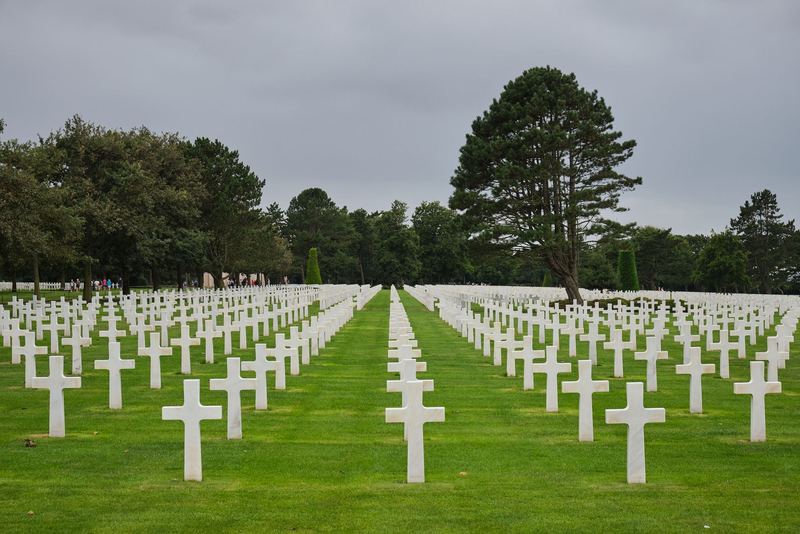
- 6Normandy American Cemetery · Day 1, last admission 4:30 p.m.
- 7Omaha Beach, Les Braves (Saint-Laurent-sur-Mer) · Day 1, last stop
- 8Longues-sur-Mer battery · Day 2, first stop
- 9Arromanches, Musée du Débarquement · Day 2
- 10British Normandy Memorial (Ver-sur-Mer) · Day 2
- 11Juno Beach Centre (Courseulles-sur-Mer) · Day 2
- 12Bény-sur-Mer Canadian War Cemetery (Reviers) · Day 2
- 13Sword Beach, Ouistreham (Riva-Bella) · Day 2
- 14Pegasus Bridge (Bénouville) · Day 2, outside only while the museum is closed
Map data © OpenStreetMap contributors (ODbL)
Day 1: the American sector
About 155 km (96 miles) and 2 hours 40 minutes of driving. The route drives west to the far end first and works back east, so the afternoon stops are close to Bayeux and the cemetery falls before its 4:30 p.m. last admission.

8:15 a.m. Leave Bayeux. 56 km (35 miles), 44 minutes to Sainte-Mère-Église.
9:00 to 10:30 a.m. Sainte-Mère-Église. The town of the American airborne landings, with the Airborne Museum on the church square. The museum opens at 9 a.m. from May to August (9:30 a.m. in April and September, 10 a.m. from October to March) and closes at 7 p.m. in summer; it says a visit takes about two hours, so 90 minutes means choosing what to see. More in Sainte-Mère-Église.
10:50 a.m. to 12:20 p.m. Utah Beach. 15 km (9 miles), 17 minutes. The Utah Beach Landing Museum stands behind the beach where American troops came ashore; it suggests 1.5 to 2 hours. Open every day 9:30 a.m. to 7 p.m. from May to September and 10 a.m. to 6 p.m. from October to April, with ticket sales ending an hour before closing. The museum has its own car park. More in Utah Beach.
12:20 to 1:10 p.m. Lunch. Bring a picnic or stop in a village on the way east.
1:40 to 2:10 p.m. La Cambe German war cemetery. 33 km (21 miles), 30 minutes. The Volksbund, the German war graves commission, says 21,245 German soldiers are buried here. Entry is free; from April 1 to October 31 the tourist office lists 8 a.m. to 7 p.m. (9 a.m. on weekends), and 8:30 a.m. to 5 p.m. in winter. It's a quiet stop, and the only German cemetery on this route. More in La Cambe German cemetery.
2:30 to 3:15 p.m. Pointe du Hoc. 12 km (7 miles), 17 minutes. The cliff top that US Army Rangers scaled on June 6, 1944, still pitted with craters. Free, open daily 9 a.m. to 5 p.m. from April to September. Until mid-2027, ABMC's restoration work limits the visit to the west pathway, the visitor center is closed and the main parking lot (P1) is closed until early 2027, so park only where signs tell you. More in Pointe du Hoc.
3:35 to 4:50 p.m. Normandy American Cemetery. 14 km (9 miles), 18 minutes. Arriving around 3:35 gives you almost an hour of margin before the 4:30 p.m. last admission; the cemetery closes at 5 p.m. It's free and open every day except December 25 and January 1. ABMC has said it plans free pre-registration for visits from summer 2027, so check before you go next year. More in the American Cemetery.
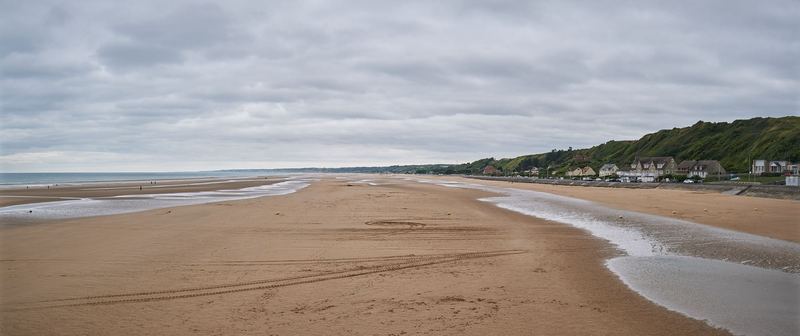
5:00 to 5:40 p.m. Omaha Beach at Les Braves. 5 km (3 miles), 9 minutes. The cemetery's own path down to the beach has been closed since 2016, according to ABMC, so drive down to Saint-Laurent-sur-Mer, where the Les Braves memorial sculpture stands. The beach doesn't close, which is why it comes last. More in Omaha Beach.
6:05 p.m. Back in Bayeux. 21 km (13 miles), 22 minutes.
Day 2: the British and Canadian sectors
About 102 km (63 miles) and 2 hours of driving. This day runs west to east along the coast road and comes back to Bayeux from Caen.

8:40 a.m. Leave Bayeux. 9 km (5 miles), 14 minutes.
8:55 to 9:25 a.m. Longues-sur-Mer battery. Free and open all year; the tourist office says a visit takes about 30 minutes. Three of the four casemates still hold their guns. More in the Longues-sur-Mer battery.
9:40 to 11:10 a.m. Arromanches. 8 km (5 miles), 12 minutes. The remains of the Mulberry artificial harbor sit offshore, and the Musée du Débarquement on the seafront explains how it worked. From May to August the museum opens 9 a.m. to 7 p.m. (Sundays from 10 a.m. except in June, July and August), the ticket office closes 45 minutes before the museum, and adults pay $14 / €12.90. More in Arromanches.
11:20 a.m. to 12:35 p.m. British Normandy Memorial, Ver-sur-Mer. 7 km (4 miles), 10 minutes. On the hillside above Gold Beach, it records the names of those under British command who died on D-Day and in the Battle of Normandy. It's free and open all year. Its Winston Churchill Centre, with the café and shop, is closed for winter and reopens in April 2027.
12:45 to 1:35 p.m. Lunch in Courseulles-sur-Mer. 7 km (4 miles), 10 minutes.
1:35 to 3:15 p.m. Juno Beach Centre. The Canadian museum on Juno Beach. Open 9:30 a.m. to 7 p.m. from May to August, ticket sales end 45 minutes before closing, and adults pay $10 / €9. It says the museum needs at least 1 hour 30 minutes, and its guides run a 45-minute tour of the bunkers in front of the building. Parking on site is free during opening hours. Backpacks and luggage aren't allowed inside, so leave them locked out of sight in the car. More in Juno and Sword beaches.
3:25 to 3:55 p.m. Bény-sur-Mer Canadian War Cemetery. 6 km (4 miles), 10 minutes. Despite its name, it's near Reviers. The Commonwealth War Graves Commission (CWGC) says it holds 2,048 Second World War burials, mostly Canadian, many of them men of the 3rd Canadian Division who died on June 6 or in the first days of the advance toward Caen. It's permanently open, with a lay-by for about five cars in front and a larger car park on the right-hand side. Climb one of the two viewing platforms at the entrance to see the whole cemetery.
4:20 to 4:50 p.m. Sword Beach at Ouistreham. 18 km (11 miles), 22 minutes. The easternmost of the five landing beaches. Walk the seafront at Riva-Bella, Ouistreham's beach district, before turning inland.
5:00 to 5:30 p.m. Pegasus Bridge, from the outside. 7 km (4 miles), 9 minutes. The Mémorial Pegasus museum, which keeps the original bridge, is closed for works until spring 2027 (Normandie Tourisme gives May, other tourist offices June). The bridge you can cross today, the canal bank where the gliders landed and Café Gondrée are all outside the museum, so the stop still works. More in Pegasus Bridge.
6:05 p.m. Back in Bayeux. 40 km (25 miles), 34 minutes by the Caen ring road.
If it rains or a site is closed
Rain doesn't close the outdoor sites, but it makes long walks at Pointe du Hoc and on the beaches less pleasant. Swap an outdoor stop for one of these, all near the route:

- Day 1, near the cemetery: the Overlord Museum at Colleville-sur-Mer, about 500 meters from the American Cemetery entrance, according to the museum. Open 9:30 a.m. to 7 p.m. from June to August, so it can take the place of Omaha at the end of the day.
- Day 1, near Carentan: D-Day Experience and Dead Man's Corner at Saint-Côme-du-Mont, at the edge of Carentan. From April to September its ticket office is open 9:30 a.m. to 5:30 p.m.
- Day 2, at Arromanches: Arromanches 360, the circular cinema on the cliff with a 20-minute film. Check its calendar: in November 2026 it was closed on Mondays.
- Day 2, at the end: the Mémorial de Caen, on the edge of Caen, on your way back to Bayeux. It says the average visit is four hours, so on a wet day it can replace Sword and Pegasus entirely.
Closures to plan around in 2026-27:
| Site | Closure or limit |
|---|---|
| Pointe du Hoc | West path only until mid-2027; P1 parking closed until early 2027; 12:30 to 1:30 p.m. break from October to March |
| Mémorial Pegasus | Closed for works until spring 2027 |
| Utah Beach Museum | Closed from November 16 to December 14 |
| Airborne Museum | Closed in December and January, except the Christmas school holidays |
| Juno Beach Centre | Closed in January and on December 25 |
| Musée du Débarquement, Arromanches | Closed in January and on December 24, 25 and 31 |
| Overlord Museum | Closed from January 4 to February 12 |
| Mémorial de Caen | Closed from January 4 to 25, 2027 |
| La Cambe | Closed between Christmas and New Year's Day |
| American Cemetery | Closed December 25 and January 1 |
In winter, keep the same order but expect museums to open at 10 a.m., so start each day half an hour later. Every museum on the route is compared in my D-Day museums guide.
Doing it in one day instead
If you only have one day, don't try to squeeze both days into it. Choose the sector that matters most to you. For most Americans that's day one, and my one-day loop of the American sector covers it with Longues-sur-Mer and Arromanches at the end. Canadians and British visitors are better off with day two on its own.
Self-drive or a guided tour?
Driving yourself gives you the order, the pace and the British and Canadian day that most tours leave out. What you give up is a guide explaining what happened where you're standing, which matters most at Omaha Beach and Pointe du Hoc.

A mix works well: drive day two yourself, and take a guided tour from Bayeux for the American sector. The options, with prices and group sizes, are on my D-Day tours from Bayeux page, and every type of tour is compared on Normandy D-Day tours. If you'd rather have a guide for both days, look at a private D-Day tour.
Printable stop list
Times assume a summer day and the driving times above. "Open" is the site's own summer schedule.
| Day | Stop | Arrive | Time there | Open (summer) | Parking |
|---|---|---|---|---|---|
| 1 | Sainte-Mère-Église, Airborne Museum | 9:00 a.m. | 1 h 30 | 9 a.m. to 7 p.m. | See parking guide |
| 1 | Utah Beach Landing Museum | 10:50 a.m. | 1 h 30 | 9:30 a.m. to 7 p.m. | Museum car park |
| 1 | Lunch | 12:20 p.m. | 50 min | ||
| 1 | La Cambe German cemetery | 1:40 p.m. | 30 min | 8 a.m. to 7 p.m. (weekends from 9) | See parking guide |
| 1 | Pointe du Hoc | 2:30 p.m. | 45 min | 9 a.m. to 5 p.m. | Signposted lots only |
| 1 | Normandy American Cemetery | 3:35 p.m. | 1 h 15 | 9 a.m. to 5 p.m., last entry 4:30 | See parking guide |
| 1 | Omaha Beach, Les Braves | 5:00 p.m. | 40 min | Public beach | See parking guide |
| 2 | Longues-sur-Mer battery | 8:55 a.m. | 30 min | All year | See parking guide |
| 2 | Arromanches, Musée du Débarquement | 9:40 a.m. | 1 h 30 | 9 a.m. to 7 p.m. | See parking guide |
| 2 | British Normandy Memorial | 11:20 a.m. | 1 h 15 | All year | See parking guide |
| 2 | Lunch, Courseulles | 12:45 p.m. | 50 min | ||
| 2 | Juno Beach Centre | 1:35 p.m. | 1 h 40 | 9:30 a.m. to 7 p.m. | Free, museum hours |
| 2 | Bény-sur-Mer Canadian cemetery | 3:25 p.m. | 30 min | Permanently open | Lay-by and car park |
| 2 | Sword Beach, Ouistreham | 4:20 p.m. | 30 min | Public beach | See parking guide |
| 2 | Pegasus Bridge (outside) | 5:00 p.m. | 30 min | Bridge and canal bank open; museum closed until spring 2027 | See parking guide |
"See parking guide" means the parking table in my car rental guide, which lists what each site's official page says, and where it says nothing.
Frequently asked questions
Can you see the D-Day beaches without a tour?
Yes. The beaches are public, and the American Cemetery, Pointe du Hoc, La Cambe, the Bény-sur-Mer Canadian cemetery, the Longues-sur-Mer battery and the British Normandy Memorial are free. What you need is a car: the sites are spread along the whole coast, and the bus line that links them runs only in July and August. Read up before each stop if you want the story a guide would tell you.
How many days do you need for the D-Day beaches?
Two full days covers the main sites of all five beaches at a sensible pace: the American sector on day one, the British and Canadian sectors on day two. One day is enough for the American sector alone. Add a third day if you want a long museum visit, such as the Mémorial de Caen, which says its average visit is four hours.
Where should you start a self-guided D-Day tour?
In Bayeux. It's about 24 km (15 miles) from the American Cemetery and 9 km from Longues-sur-Mer, so both days start and end with short drives. On the American day, drive to Sainte-Mère-Église first and work back east, so the cemetery falls in the afternoon and the drive home is short.
What closes early on the D-Day beaches?
The Normandy American Cemetery: last admission is 4:30 p.m. and it closes at 5 p.m. all year. From October to March, Pointe du Hoc also closes from 12:30 to 1:30 p.m. Most museums close at 6 or 7 p.m. in summer and stop selling tickets 45 minutes to an hour before closing. Beaches and outdoor memorials like Longues-sur-Mer don't close.
Sources (22)
- ABMC: Plan your visit to Normandy American Cemetery
- ABMC: Plan your visit to Pointe du Hoc Ranger Monument
- ABMC: Pointe du Hoc Ranger Monument restoration project
- Airborne Museum, Sainte-Mère-Église: hours and prices
- Utah Beach Landing Museum: practical information
- Volksbund: La Cambe German war cemetery
- Bayeux Bessin Tourisme: German military cemetery, La Cambe (hours)
- Bayeux Bessin Tourisme: German battery at Longues-sur-Mer
- Musée du Débarquement, Arromanches: prices and opening times
- British Normandy Memorial: plan your visit
- Juno Beach Centre: practical information
- CWGC: Bény-sur-Mer Canadian War Cemetery, Reviers
- Normandie Tourisme: Mémorial Pegasus (closure for renovation)
- Caen la Mer Tourisme: Pegasus Bridge, the museum and Café Gondrée
- Overlord Museum: opening hours and fees
- Mémorial de Caen: opening hours calendar and average visit
- D-Day Experience: FAQ (hours, closures, simulator)
- Arromanches 360: opening hours and film
- UNESCO World Heritage Committee, decision 48 COM 8B.26 (July 26, 2026)
- Préfecture d'Île-de-France: A13 Saint-Cloud tunnel closure from November 16, 2026
- OSRM (OpenStreetMap routing): driving distances and times between stops
- OpenStreetMap Nominatim: coordinates of the stops
Keep planning
Related guides