Road trip guide
The Alabaster Coast: A Road Trip from Étretat to Dieppe
Quick answer
The Alabaster Coast (Côte d'Albâtre) is Normandy's 130 km of white chalk cliffs between Le Havre and Le Tréport. From Étretat to Dieppe it's about 94 km (58 miles) of road, roughly 2 hours of driving, so one day by car works. Stop in Yport, Fécamp, Saint-Valery-en-Caux, Veules-les-Roses and Varengeville.
| Fact | Detail |
|---|---|
| Étretat to Dieppe by the coast | About 94 km (58 miles) and 2 hours of driving in six legs, without traffic |
| Palais Bénédictine, Fécamp | Open all year in 2026; adults from $22 / €20 (tasting included), children $9 / €8; booking strongly recommended |
| Fécamp abbey church | Free; daily 9 a.m. to 5 p.m. (October to March) and 9 a.m. to 6:30 p.m. (April to September), except during services |
| Without a car | Nomad coaches 509 (Le Havre, Étretat, Yport, Fécamp), 513 (Fécamp to Saint-Valery) and 514 (Saint-Valery, Veules, Varengeville, Dieppe) |
| Trains from Paris | Dieppe from 2 h 14 with a change in Rouen (13 a day); Fécamp from 2 h 36 with one change (10 a day) |
Étretat gets the crowds, but the cliffs don't stop there. White chalk runs on along the Channel to Le Tréport, about 130 km (81 miles) of it according to the Le Havre Étretat tourist office, broken by fishing harbors and small valleys. This is the Alabaster Coast, the Côte d'Albâtre, and this page follows it east from Étretat to Dieppe.
Hours and prices come from the sites and tourist offices, checked in November 2026; driving times are from OpenStreetMap routing (OSRM), without traffic.
The Alabaster Coast at a glance
Here's the coast from west to east, with the drive from the previous stop.
| Stop | Drive from previous stop | Time to allow | Why stop |
|---|---|---|---|
| Étretat | 29 km (18 mi), 36 min from Le Havre station | 3 to 4 hours | The arches and the Aiguille |
| Yport | 13 km (8 mi), 17 min | 30 to 45 minutes | Fishing village and pebble beach in a gap in the cliffs |
| Fécamp | 7 km (4.4 mi), 12 min | Half a day | Palais Bénédictine, the abbey church, Cap Fagnet |
| Saint-Valery-en-Caux | 33 km (20.5 mi), 37 min | 1 hour | Harbor, a 16th-century timbered house, cliff-top memorials |
| Veules-les-Roses | 8 km (5 mi), 11 min | 1.5 hours | The river walk, mills and watercress beds |
| Varengeville-sur-Mer | 21 km (12.8 mi), 25 min | 1 hour (more for the garden) | Clifftop church, Braque's grave, the Bois des Moutiers |
| Dieppe | 12 km (7.3 mi), 17 min | Half a day | Château-Musée, the harbor, the 1942 raid |
Add it up and Étretat to Dieppe is about 94 km (58 miles) and 2 hours of driving. The fastest route between the two, inland, is 114 km and 1 hour 30. The coast road adds about half an hour and passes every village on this page.
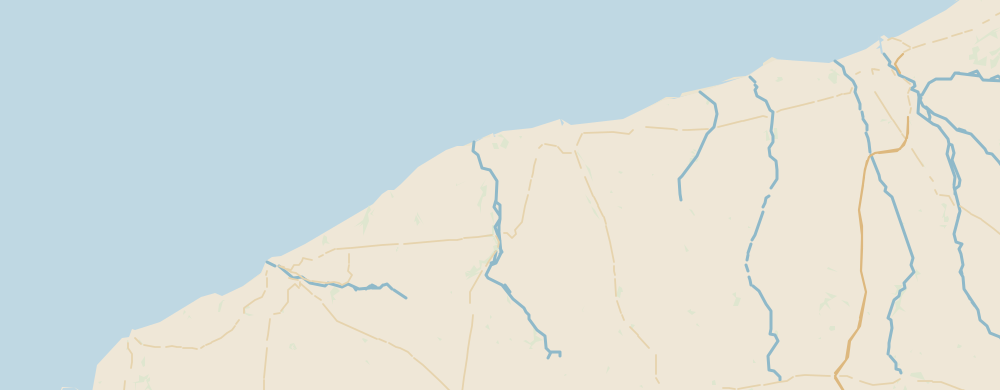
- 1Étretat · Where the drive starts; 29 km (18 mi) from Le Havre station
- 2Yport · 13 km (8 mi) from Étretat, about 17 min
- 3Palais Bénédictine, Fécamp · 7 km (4.4 mi) from Yport, about 12 min
- 4Cap Fagnet · Chapel and blockhouses above Fécamp
- 5Saint-Valery-en-Caux · 33 km (20.5 mi) from Fécamp, about 37 min
- 6Veules-les-Roses · 8 km (5 mi) from Saint-Valery, about 11 min
- 7Varengeville church and Bois des Moutiers · 21 km (12.8 mi) from Veules, about 25 min
- 8Château-Musée de Dieppe · 12 km (7.3 mi) from Varengeville, about 17 min
- 9Dieppe Canadian War Cemetery · Hautot-sur-Mer, about 12 min from central Dieppe
Map data © OpenStreetMap contributors (ODbL)
Étretat, where the coast starts
Étretat is the famous one: the Porte d'Aval arch, the 51-meter Aiguille needle, and a chapel on the opposite cliff. It's 29 km (18 miles) from Le Havre train station, about 36 minutes by road. My Étretat guide covers the walks, tides, parking and the day tours from Paris.

If you're coming off a ship, my Le Havre cruise port guide compares shore excursions and car rental at the terminal. If you want an easier day than this one, Étretat also pairs with Honfleur, 45 minutes away over the Pont de Normandie.
Beyond Étretat, the tour market dries up. On November 15, 2026, I found no Viator or GetYourGuide tour that stops in Fécamp, Yport, Saint-Valery, Veules, Varengeville or Dieppe. For the rest of this coast, you'll need a car or the regional coaches.
Yport
Yport is the first village east of Étretat, 17 minutes by car, set in one of the gaps in the cliffs known locally as valleuses. The Fécamp tourist office describes it as a fishing village that still carries the memory of its sailors, with old capstans and brightly painted doris boats from the days when its men fished as far as the Newfoundland banks. The beach is pebbles, under the chalk cliffs on both sides.
Walk the seafront and the beach, then drive on to Fécamp, 12 minutes away, or walk there on the GR21 coast path.
Fécamp: the Bénédictine Palace, the abbey and the cliffs
Fécamp is the stop that deserves the most time. The tourist office notes that the dukes of Normandy made it one of their main seats in the 10th and 11th centuries; the town also inspired Monet, Berthe Morisot and Maupassant. Plan half a day.

The Palais Bénédictine
The Palais Bénédictine looks like a château and works as a distillery. Alexandre Le Grand launched Bénédictine liqueur in 1863, and the house's own story credits the recipe to a monk of Fécamp abbey, Dom Bernardo Vincelli, in 1510. His first big factory burned in 1892, four years after it opened, and he rebuilt it with the architect Camille Albert as a Gothic and Renaissance palace; the museum opened in 1900. The building still houses the only Bénédictine distillery in the world, where the liqueur is made from 27 plants and spices.
The visit. You walk through the museum collections at your own pace, then a guide takes you through the distillery and cellars, and the visit ends with a tasting of three Bénédictine expressions, for adults only. Longer options include a Connoisseur Experience (about 1 hour 45) and a cocktail workshop (about 2 hours).
Hours and prices. The Fécamp tourist office lists the palace as open all year in 2026, with adult tickets from $22 / €20 and children at $9 / €8, as of November 2026. It strongly recommends booking ahead on the palace's website. Daily hours vary, so check them when you book.
The abbey church of the Holy Trinity (Fécamp Abbey)
The Abbatiale de la Sainte-Trinité belonged to the Benedictine abbey founded in 1001, and it is 127 meters (417 feet) long. Inside, look for the astronomical tide clock from 1667. Entry is free, every day, except during services: 9 a.m. to 5 p.m. from October to March and 9 a.m. to 6:30 p.m. from April to September, according to the tourist office. Guided tours follow a seasonal program.
Cap Fagnet and the harbor
Cap Fagnet is the headland north of town, more than 100 meters above the sea according to Normandie Tourisme, about 2 km by road from the tourist office. On top is the sailors' chapel of Notre-Dame-de-Salut, a listed historic monument, and the blockhouses of a German radar station from the Second World War; you can walk around on your own, and the town runs guided tours on a set program.
Down by the harbor, the Les Pêcheries museum, in a former fish-drying building, has a 360-degree viewing deck on top.
Saint-Valery-en-Caux
Saint-Valery-en-Caux is a working harbor between Fécamp and Dieppe, 37 minutes east of Fécamp. The town center was rebuilt after the Second World War, but the Maison Henri IV survived: a carved timber house from the 16th century, now a museum. From the outer harbor, a path climbs the cliff to the 51st Highland Division monument and the Costes and Bellonte monument: Saint-Valery was the last French town the two aviators flew over before their Paris to New York flight in 1930, according to Seine-Maritime's tourism board.
An hour is enough here.
Veules-les-Roses
Veules-les-Roses, 11 minutes on from Saint-Valery, is the only village on the Alabaster Coast in the association Les Plus Beaux Villages de France. What makes it is a river. The Veules runs just 1,149 meters from its springs to the sea, and the village and the association both call it "the smallest river in France." Along the way it turns mill wheels, passes thatched cottages and feeds watercress beds at its source.

The river walk. A 3.5 km (2.2-mile) return walk starts from the beach and follows the river up through the village, with information boards about the mills and the watercress. Allow about 1 hour 30 minutes. At low tide the beach is a wide stretch of sand, and the seafront has been redesigned to give the river back its natural course.
There's a small market on Rue Victor Hugo every morning from 9 a.m. to noon (1 p.m. in summer), according to the association's page on the village. If you'd like to wake up here, Booking.com listed 50 places to stay in and around Veules-les-Roses when I checked, from hotels to guesthouses.
See places to stay in Veules-les-Roses on Booking.comvia Booking.com
In Veules-les-Roses, walk up the river from the beach to its source and back. It takes about an hour and a half, past watercress beds and old mills, and you finish where you started, on the shingle between two cliffs.
Varengeville-sur-Mer
In Varengeville, drive straight to the two places that matter.
The church and the marine cemetery. The Église Saint-Valery stands about 80 meters above the sea, with the cliffs stretching away on both sides, according to the Dieppe-Maritime tourist office. Monet painted it, and the painter Georges Braque is buried in the small cemetery around it; one of the church windows is his. Entry is free.
The Bois des Moutiers. A short drive away is an English garden from 1898, designed by the architect Edwin Lutyens and the garden designer Gertrude Jekyll for Guillaume Mallet, in the Arts and Crafts style. In 2026 it opened from April 1 to October 31, by reservation only: Tuesday to Saturday mornings from 10 to 11:45 a.m. from April to June and in August (to the 29th), then Friday and Saturday mornings from September 4. Dates for 2027 weren't out yet when I checked.
Varengeville also has a place in the 1942 raid: Veterans Affairs Canada records that British No. 4 Commando landed here to destroy a coastal battery, and succeeded.
Dieppe
Dieppe, 17 minutes from Varengeville, is a fishing port and an old seaside resort with a long pebble beach and a promenade. Seine-Maritime's tourism board calls it France's leading port for scallops, and it holds a Herring and Scallop Festival every autumn.

The Château-Musée. The castle sits on the western cliff, looking over the town and the Channel. Its collections include what its listing calls the largest collection of ivories in Europe, carved in Dieppe from the 16th to the 20th centuries, along with paintings and prints by Georges Braque. From October to December 2026 it's open Wednesday to Sunday, 10 a.m. to noon and 2 to 5 p.m. (6 p.m. on Saturdays), closed Mondays and Tuesdays; adults pay $7 / €6.50, as of November 2026.
The market. On Saturday mornings, the town center fills with the Dieppe market, which Seine-Maritime's tourism board says was voted the most beautiful market in France. If you can, end your road trip on a Friday night and stay for it.
The 1942 Dieppe Raid
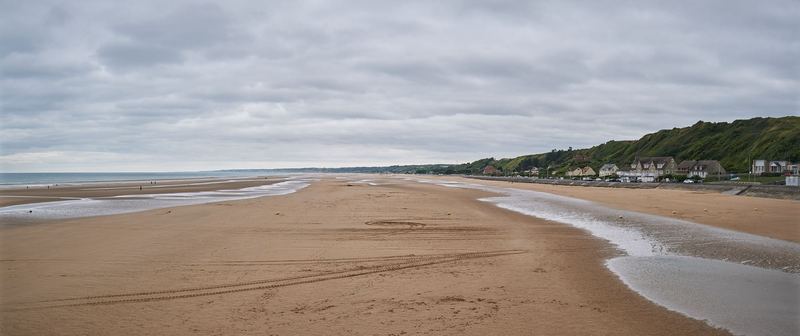
On August 19, 1942, the Allies landed at Dieppe in Operation Jubilee, a raid on a defended port. According to Veterans Affairs Canada, 4,963 of the soldiers who embarked were Canadian, most of them from the 2nd Canadian Infantry Division, alongside about 1,075 British troops and 50 U.S. Rangers. They landed at Puys, Pourville and on the main beach in front of the town, while British commandos attacked coastal batteries at Berneval and Varengeville.
It went badly. Only 2,210 of the Canadians returned to England, many of them wounded. Canada counted 3,367 casualties, including 916 dead and 1,946 taken prisoner. Veterans Affairs Canada calls it the single bloodiest day of the Second World War for Canada, and says the lessons learned there on fire support and tactics were applied to the Normandy landings in June 1944. As my Arromanches page explains, the raid also convinced the Allies to bring their own harbor to Normandy rather than count on capturing one.
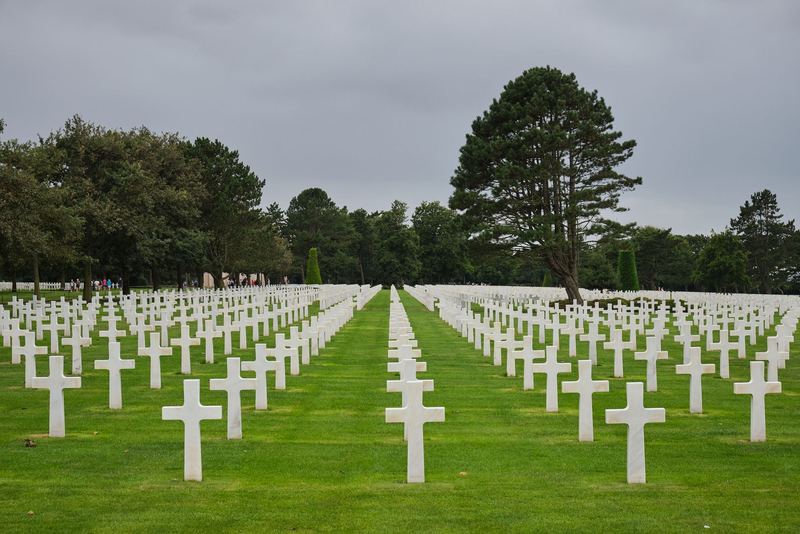
In town, the Mémorial du 19 Août 1942 keeps the memory of the raid and its ties with Canada. The Dieppe Canadian War Cemetery is about 5 km south, at Hautot-sur-Mer, 12 minutes by car from the center. Veterans Affairs Canada counts 944 Allied servicemen buried there, 707 of them Canadian. The headstones stand back to back in long double rows, the way the German army first buried the dead; the Allies chose not to change it after the liberation.
The Canadian story in Normandy continues on Juno Beach, where Canadian troops landed on June 6, 1944.
How to drive the coast in a day (or two)
In one day. Here's a schedule that works with a car and an early start in Étretat:
- 9 a.m. Étretat: one cliff-top walk, not both.
- 11 a.m. Yport, a short stop.
- 11:30 a.m. Fécamp: lunch, the Palais Bénédictine and the abbey church.
- 3:45 p.m. Saint-Valery-en-Caux: the harbor and the Maison Henri IV.
- 5 p.m. Veules-les-Roses: the river walk.
- 6:45 p.m. Varengeville: the church and the view.
- 7:30 p.m. Dieppe for dinner, or the night.
From Dieppe, Rouen is 67 km (42 miles), about 55 minutes, and Le Havre train station 115 km (72 miles), about 1 hour 25. If you've already seen Étretat, start in Fécamp and the day gets a lot easier.
In two days. Sleep in Fécamp or Veules-les-Roses and give the second day to Varengeville, the Bois des Moutiers in season, Dieppe and the war cemetery. That's how I'd do it if the Palais Bénédictine and Dieppe both matter to you.
From Rouen or Paris. Fécamp is 70 km (44 miles), about 1 hour, from Rouen, and Dieppe 65 km (40 miles), 52 minutes. From central Paris, Fécamp is 201 km (125 miles), about 2 hours 35, and Dieppe 196 km (122 miles), about 2 hours 30. Driving out of Paris, remember that the A13 Saint-Cloud tunnel is closed toward Normandy from November 16, 2026 to August 31, 2027, according to the Préfecture d'Île-de-France; my Paris to Normandy guide covers the detour. To combine this coast with Rouen and the rest of the region, see my Normandy itinerary, and my Rouen guide for the city.
Renting a car. Le Havre is the natural place to pick one up for this route: on Discover Cars, it had rental desks downtown, at the train station and at the cruise port when I checked. Rouen also has desks at the station if you're coming by train from Paris.
Compare car rental in Le Havre on Discover Carsvia Discover Cars
Without a car
It can be done with the Nomad regional coaches, three lines end to end:
- Line 509, Le Havre to Fécamp, stops in Étretat (Mairie) and Yport, and runs every day of the year except May 1.
- Line 513 links Fécamp station and Saint-Valery-en-Caux.
- Line 514 links Saint-Valery-en-Caux and Dieppe, with stops in Veules-les-Roses and Varengeville-sur-Mer.
Lines 513 and 514 run Monday to Saturday, and on Sundays and holidays only in summer. Check the Nomad timetables first, and plan two or three days with overnights rather than one long day of connections.
Trains. From Paris Saint-Lazare, SNCF Connect listed 13 trains a day to Dieppe, the fastest in 2 hours 14 minutes with a change in Rouen, and 10 a day to Fécamp, the fastest in 2 hours 36 with one change. From Rouen, 17 direct trains a day reach Dieppe, the fastest in 43 minutes. Fécamp is also on the regional line to Le Havre through Bréauté-Beuzeville, with 12 direct trains each weekday, 42 minutes on the fastest.
Where to stay
- Fécamp is the middle of the route and has the most choice after Dieppe: Booking.com listed 210 places to stay when I checked. Best if Fécamp and Étretat are your priority.
- Veules-les-Roses is the quiet option, with 50 places listed, for an evening walk along the river and the beach.
- Dieppe has the most places to stay, 336 listed, and the easiest end point if you're heading on to Rouen or Paris, or staying for the Saturday market.
See hotels in Fécamp on Booking.comvia Booking.com
See hotels in Dieppe on Booking.comvia Booking.com
For the rest of the region, see my where to stay in Normandy guide.
Frequently asked questions
What is the Alabaster Coast?
It's the chalk coastline of the Seine-Maritime department in Normandy, running about 130 km (81 miles) from Le Havre to Le Tréport, according to the Le Havre Étretat tourist office. The name refers to the whiteness of the cliffs. Étretat, Fécamp, Saint-Valery-en-Caux and Dieppe are its best-known towns.
Can you drive from Étretat to Dieppe in a day?
Yes. Following the coast through Yport, Fécamp, Saint-Valery-en-Caux, Veules-les-Roses and Varengeville, it's about 94 km (58 miles) and 2 hours of driving on OpenStreetMap routing. That leaves time for a visit in Fécamp, lunch, and short stops in the villages. From Dieppe, Rouen is 55 minutes away and Le Havre about 1 hour 25.
Is Fécamp worth visiting?
Yes, for three things close together: the Palais Bénédictine, the 19th-century palace that still houses the only Bénédictine distillery in the world; the 127-meter abbey church of the Holy Trinity, free to visit; and Cap Fagnet, more than 100 meters above the sea. Give it half a day.
Is Veules-les-Roses worth the detour?
Yes, if you have an hour and a half. It's the only village on this coast in Les Plus Beaux Villages de France. The Veules, which the village calls the smallest river in France, runs 1,149 meters past mills and watercress beds to the beach, and a 3.5 km return walk follows it.
Can you visit the Alabaster Coast without a car?
Yes, but slowly. Nomad coach lines 509, 513 and 514 link Le Havre, Étretat, Yport, Fécamp, Saint-Valery-en-Caux, Veules-les-Roses, Varengeville and Dieppe, and trains reach Fécamp and Dieppe from Paris. Lines 513 and 514 run Monday to Saturday, and on Sundays and holidays only in summer. I found no tours beyond Étretat.
Sources (30)
- Le Havre Étretat Normandie Tourisme: the Alabaster Coast (length, limits, cliff heights)
- Seine-Maritime Attractivité: coast and beaches (towns, pebble beaches, valleuses)
- Seine-Maritime Attractivité: Fécamp
- Seine-Maritime Attractivité: Saint-Valery-en-Caux
- Seine-Maritime Attractivité: Dieppe
- Seine-Maritime Attractivité: Château-Musée de Dieppe (hours and prices, fall 2026)
- Fécamp tourist office: Palais Bénédictine listing (2026 opening, prices)
- Fécamp tourist office: Abbatiale de la Sainte-Trinité (hours, free entry)
- Fécamp tourist office: heritage and history of Fécamp (in German)
- Fécamp tourist office: GR21 walking leaflet, Yport and Cap Fagnet (in French)
- Normandie Tourisme: Palais Bénédictine, museum and distillery
- Normandie Tourisme: Cap Fagnet, the blockhouses (classified site)
- Bénédictine: heritage timeline (abbey, 1863, the palace)
- Bénédictine: le Palais (architect Camille Albert, 1892 fire)
- Bénédictine: tours and experiences
- Les Plus Beaux Villages de France: Veules-les-Roses
- Dieppe-Maritime tourist office: Église Saint-Valery and marine cemetery, Varengeville-sur-Mer
- Le Bois des Moutiers: history and 2026 opening (in French)
- Veterans Affairs Canada: the Dieppe Raid
- Veterans Affairs Canada: Ministers mark the 80th anniversary of the Dieppe Raid (2022)
- Nomad: coach line 509, Le Havre to Fécamp via Étretat and Yport
- Nomad: coach line 513, Saint-Valery-en-Caux to Fécamp
- Nomad: coach line 514, Saint-Valery-en-Caux to Dieppe
- SNCF Nomad Train: Fécamp, Bréauté-Beuzeville and Le Havre line (in French)
- SNCF Connect: Paris to Dieppe train times (checked November 15, 2026)
- SNCF Connect: Paris to Fécamp train times (checked November 15, 2026)
- SNCF Connect: Rouen to Dieppe train times (checked November 15, 2026)
- Préfecture d'Île-de-France: A13 Saint-Cloud tunnel closure from November 16, 2026
- OSRM (OpenStreetMap routing): driving distances
- Banque de France: EUR/USD reference rate, November 10, 2026
Keep planning
Related guides