Site guide
Longues-sur-Mer Battery: A Practical Guide to the German Guns
Quick answer
The Longues-sur-Mer battery is a German coastal gun battery on the cliffs between Omaha and Gold beaches. France's heritage register describes it as the only battery on the Normandy coast to have kept its guns: three casemates still hold theirs. It's free, open all year, and a visit takes about 30 minutes.
| Fact | Detail |
|---|---|
| Entry | Free, all year |
| Time needed | About 30 minutes |
| Guided tours | €6 (about $7) in season; in English at 10:15 a.m. and 2:15 p.m. |
| Guns | Four 150 mm naval guns; three still in place |
| From Bayeux | 9 km (5.4 miles), about 14 minutes |
| From Arromanches | 7 km (4.5 miles), about 10 minutes |
The Longues-sur-Mer battery is a row of four German gun casemates on farmland at the top of the cliffs, between Port-en-Bessin and Arromanches. It sits between the American beach at Omaha and the British beach at Gold, and on June 6, 1944, its guns could reach both. Most of the concrete is still there, and so are three of the four guns, which is what makes it worth the detour.
It's free, it never closes and half an hour is enough. Everything practical on this page was checked against the official sources in November 2026.
What you see today

I reached the battery at 8:20 p.m., with the sun already low over the Channel. The light came in sideways through the opening of the casemate and turned the gun gold, still pointing out to sea after more than eighty years. There was nobody else in the frame: just the wind, and that gun aimed at the horizon where the Allied fleet appeared.
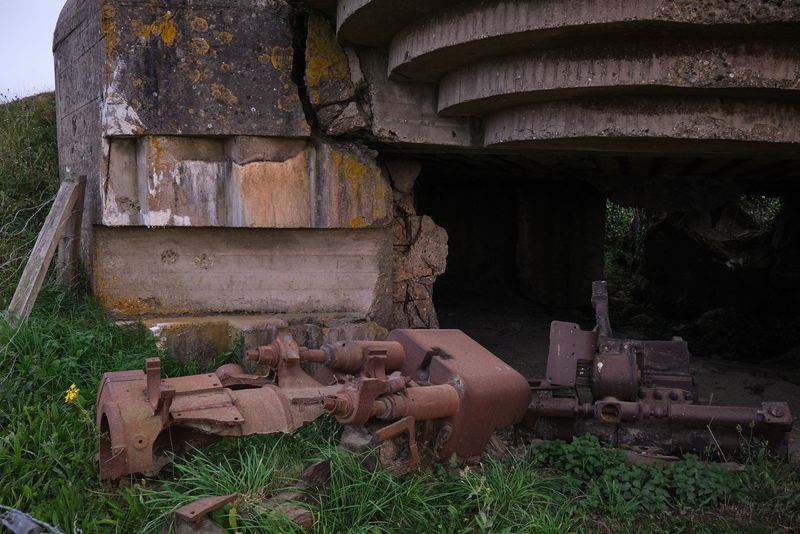
The battery had four gun casemates and a fire-control post. The casemates were built to a standard German design, type M272, and according to the site's interpretation panels each one is about 10 meters wide and 15 deep, with 2-meter walls, about 600 cubic meters of concrete and 4 tonnes of steel reinforcement. Inside each was a firing chamber with the gun, two ammunition rooms and a pit behind the mount for spent shell casings. The stepped visor over the opening was there to deflect incoming fire, and the iron hooks you can still see held camouflage nets.
The guns are 15 cm TbtsK C/36 naval guns, designed by Krupp in 1936 for light warships of the German navy. The panels give each one a barrel more than 7 meters long, a weight of almost 20 tonnes, 45 kg shells, six rounds a minute and a range of 19.5 km.
In front of the casemates, on the cliff edge about 60 meters above the sea, is the range-finding post (type M262) that directed the guns. It's closed to visitors for safety reasons, but you see it from the path. From the cliff, the panels point out the artificial harbor off Arromanches to the east and, inland, the cathedral spire of Bayeux.
A 1 km (0.6 mile) heritage trail with eight panels starts from the tourist office and covers both the history and the wildlife of the cliffs. One detail the panels mention: bats now roost in the bunkers, which is why some openings have grilles.
The only battery that kept its guns?
You'll read this claim in a lot of places. The firmest source is France's official heritage register: the Ministry of Culture's Mérimée record for the battery says it is the only battery on the Normandy coast to have kept its guns. The same record adds the detail that matters on the ground: three casemates are intact with their guns, and the fourth survives only as ruins. So don't expect four guns in a row.
The battery was first listed as a historic monument in 1994 and classified on October 25, 2001. The site belongs to the Conservatoire du littoral, the French coastal protection agency, and is managed with the Calvados Département.
Practical info
| Book | |
|---|---|
| Entry | Free, all year (open-air site) |
| Time needed | About 30 minutes, according to the tourist office |
| Guided tours | €6 (about $7) adults, €4 (about $4) ages 11 to 17, free under 11 |
| Tour times | In English 10:15 a.m. and 2:15 p.m.; in French 11:30 a.m., 3:30 p.m. and 4:45 p.m. |
| Tour season | Weekdays from April to early November, and every day in July (listing checked November 2026) |
| Tickets and meeting point | Longues-sur-Mer tourist office, at the battery site |
| Closed areas | The range-finding post, for safety |
| Heritage trail | 1 km, eight panels, starting at the tourist office; map from the tourist office |
| Languages on site | French and English |
Dollar figures use the European Central Bank rate of November 10, 2026 (€1 = $1.1214), rounded. Guided tour dates for 2027 should be checked with the Bayeux Bessin tourist office before you plan around them.
The site is open ground on top of the cliffs, with gravel and grass underfoot, so bring a jacket for the wind off the Channel. If you use a wheelchair, call the tourist office before you go (+33 2 31 21 46 87) to ask about the paths.
History in brief
Longues-sur-Mer was a naval coastal battery, known as M.K.B. Longues-sur-Mer (Marine-Küsten-Batterie), under the operational command of the German army. The site's panels, written by the historian Marc Pottier with the Conservatoire du littoral and the Calvados Département, give this outline:
- Built late. Construction started at the beginning of 1944, after Field Marshal Erwin Rommel was put in charge of inspecting the coastal defenses. The guns were installed in April 1944, and Rommel inspected the battery on May 9.
- A defended position. Besides the guns, there were anti-aircraft guns, machine-gun and mortar pits, ammunition bunkers, trenches, barbed wire and minefields. The garrison was more than 80 men, half of them over 40.
- June 6, 1944. Allied bombers cut the cables between the fire-control post and the casemates during the night, but the guns themselves survived. At dawn the battery opened fire on the Allied fleet. HMS Bulolo, the command ship for Gold Beach, had to pull back out of range. The battleship USS Arkansas, the British cruiser HMS Ajax, the French cruisers Montcalm and Georges Leygues and other ships returned fire. After firing more than 110 rounds and taking heavy damage, the battery went silent.
- June 7, 1944. In the morning the garrison surrendered to the 2nd Battalion of the Devonshire Regiment, which had landed on Gold Beach the day before. The panels say 120 Germans were taken prisoner.
Accounts differ on when the last gun stopped. The panels say late afternoon. A 2009 article in the U.S. Naval Institute's Naval History magazine says return fire knocked out three guns and the fourth kept firing until that night.
How it fits a one-day route
Longues is 9 km (5.4 miles) from Bayeux, about 14 minutes, so it fits almost any day on the beaches. It sits between two places you'll probably visit anyway:

- West: the Normandy American Cemetery, about 16 km (10 miles) and 25 minutes away. The cemetery's last admission is 4:30 p.m.
- East: Arromanches and the Mulberry harbor remains, 7 km (4.5 miles) and 10 minutes away.
Because the battery is open-air and doesn't close, it works best late in the day, after the cemetery and before Arromanches. That's the order in my D-Day beaches planning guide, and my Arromanches guide covers the next stop. The full loop with timings is on the self-guided driving route page.
To do this at your own pace you'll need a car; see car rental in Bayeux.
Compare rental cars in Bayeux on Discover Carsvia Discover Cars
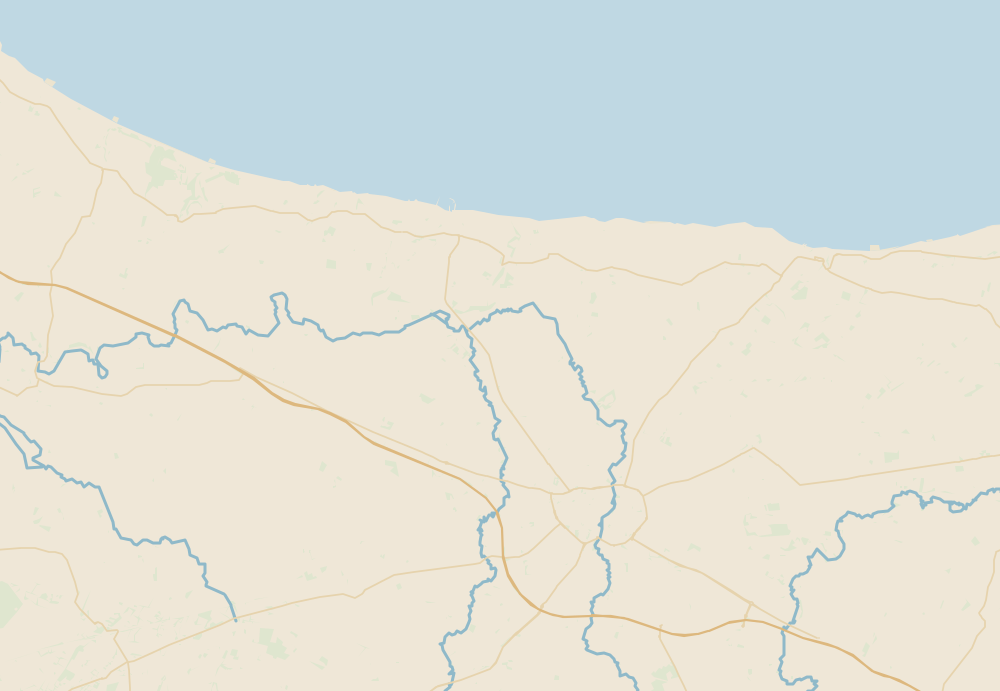
- 1Bayeux · About 14 minutes to the battery
- 2Normandy American Cemetery · About 25 minutes west; last admission 4:30 p.m.
- 3Longues-sur-Mer battery · Free, open all year
- 4Arromanches · Mulberry harbor remains, 10 minutes east
Map data © OpenStreetMap contributors (ODbL)
Tours that stop here
Most tours from Bayeux focus on the American sector and skip Longues. These two include it; prices, ratings and itineraries from Viator on November 15, 2026:
- GoldBeachCompany, American and British D-Day beaches half day: from $107 / €95 as of November 2026, rated 4.9 from 326 reviews. It leaves Place du Québec in Bayeux at 1:00 p.m., about 5 hours, with 15 minutes at Longues after Omaha Beach and the American Cemetery, then 15 minutes at the Mulberry harbor.
- Bayeux Shuttle, British & American D-Day Experience: from $167 / €148.50 as of November 2026, rated 5.0 from 73 reviews. About 8 hours from 8:45 a.m., with 20 minutes at Longues, plus Arromanches, Pointe du Hoc, Omaha, the cemetery and the British Normandy Memorial.
Normandy Sightseeing Tour's popular afternoon half day (from $104 / €92.32, rated 4.7 from 1,262 reviews) does not stop here: its listing covers Omaha Beach, Pointe du Hoc and the American Cemetery.
Check dates for GoldBeachCompany's half day on Viatorvia Viator
Check dates for Bayeux Shuttle's British & American day on Viatorvia Viator
The rest of the Bayeux tours are compared side by side on D-Day tours from Bayeux.
More of the Longues-sur-Mer battery from my visits
Longues-sur-Mer 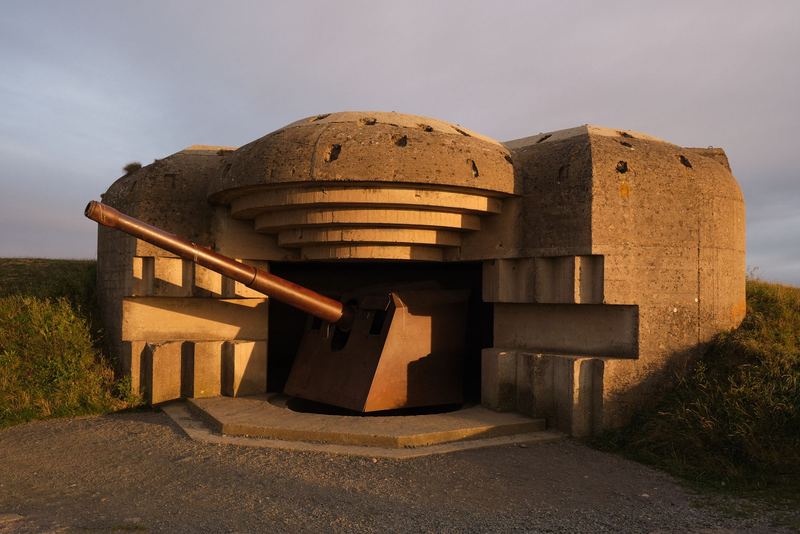
Longues-sur-Mer 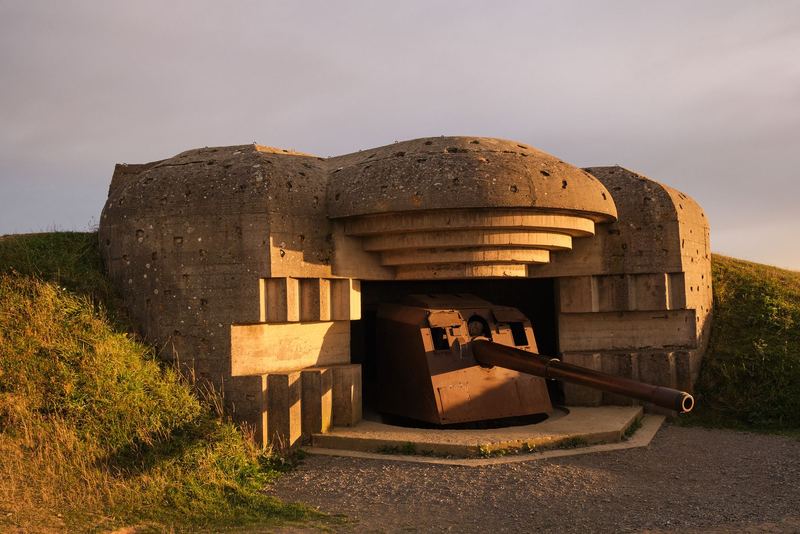
Longues-sur-Mer 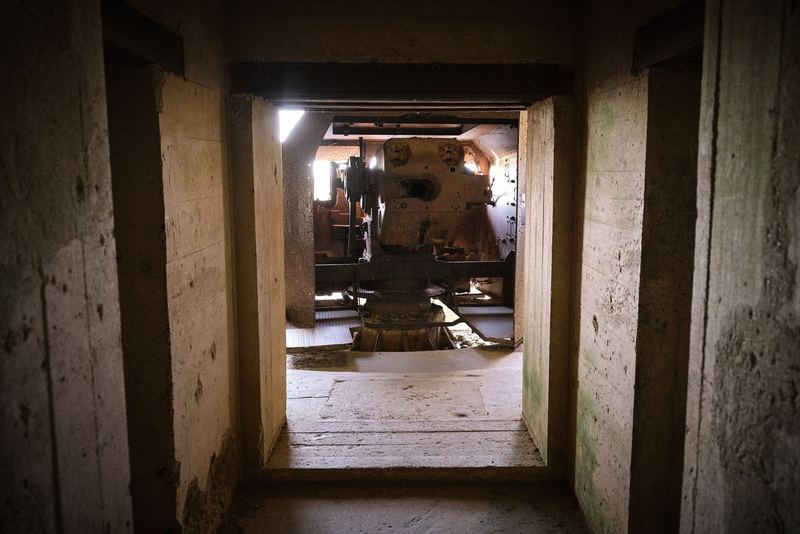
Longues-sur-Mer


Frequently asked questions
Is the Longues-sur-Mer battery free?
Yes. The Bayeux Bessin tourist office lists the battery as free to enter all year. Only the guided tours run by the tourist office are paid: €6 (about $7) for adults, €4 (about $4) for ages 11 to 17 and free under 11, with tickets sold at the Longues-sur-Mer tourist office at the site.
How long do you need at Longues-sur-Mer?
About 30 minutes, according to the tourist office, to walk round the four casemates and look out over the cliff. Allow longer if you want to follow the 1 km heritage trail with its eight interpretation panels, or join a guided tour. Tours from Bayeux that stop here give it 15 to 20 minutes.
Is it really the only battery that still has its original guns?
France's official heritage register, the Mérimée database of the Ministry of Culture, says it is the only battery on the Normandy coast to have kept its guns. The same record is precise about their state: three casemates are intact with their guns, and the fourth survives only as ruins.
Is Longues-sur-Mer worth a stop?
Yes, if you're anywhere between Omaha and Arromanches. It's the easiest place on the coast to see how a German coastal battery worked: the guns are still in their concrete casemates, and the range-finding post stands on the cliff edge in front of them. It's free and takes half an hour.
How far is Longues-sur-Mer from Bayeux and Arromanches?
By road, the battery is about 9 km (5.4 miles) and 14 minutes from Bayeux, and 7 km (4.5 miles) and 10 minutes from Arromanches. The Normandy American Cemetery at Colleville-sur-Mer is about 16 km (10 miles) west, around 25 minutes. Times are from OpenStreetMap routing with no traffic.
Can you go inside the range-finding post?
No. The tourist office says access to the range-finding post, the bunker on the cliff edge that directed the guns, is closed for safety reasons. You can still see it from the path.
Sources (14)
- Ministry of Culture, Mérimée database: Batterie d'artillerie de Longues (PA00132892)
- Bayeux Bessin Tourisme: German battery at Longues-sur-Mer
- Bayeux Bessin Tourisme: guided tours of the Longues-sur-Mer battery
- Site interpretation panel (Conservatoire du littoral, Calvados Département), transcribed by HMdb: A German coastal defence battery
- Site interpretation panel, transcribed by HMdb: each casemate, 600 cubic meters of concrete
- Site interpretation panel, transcribed by HMdb: the battle of June 6, 1944
- Site interpretation panel, transcribed by HMdb: a formidable defensive system
- Site interpretation panel, transcribed by HMdb: introduction to the trail
- U.S. Naval Institute, Naval History magazine (June 2009): Action This Day, by Christopher D. Yung
- Viator: GoldBeachCompany, American & British D-Day Beaches Half Day Tour from Bayeux
- Viator: Bayeux Shuttle, British & American D-Day Experience from Bayeux
- Viator: Normandy Sightseeing Tour, Normandy Beaches Half-Day Afternoon Trip from Bayeux (A2)
- OSRM (OpenStreetMap routing): driving distances and times
- European Central Bank: EUR/USD reference rate, November 10, 2026
Keep planning
Related guides